The St. George Hotel and Bay
Reimagining colonial heritage: regenerating one of Beirut's first modernist icons.
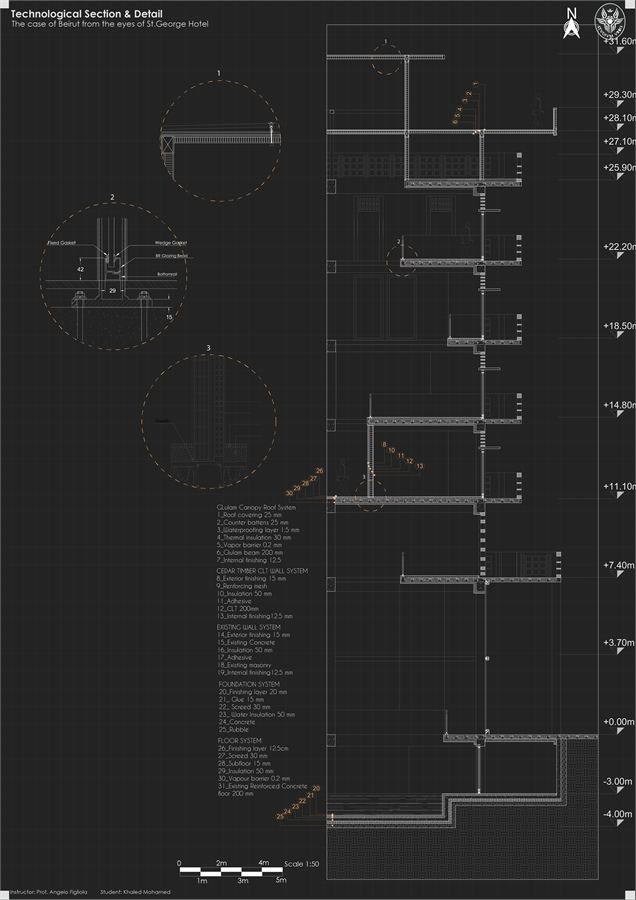
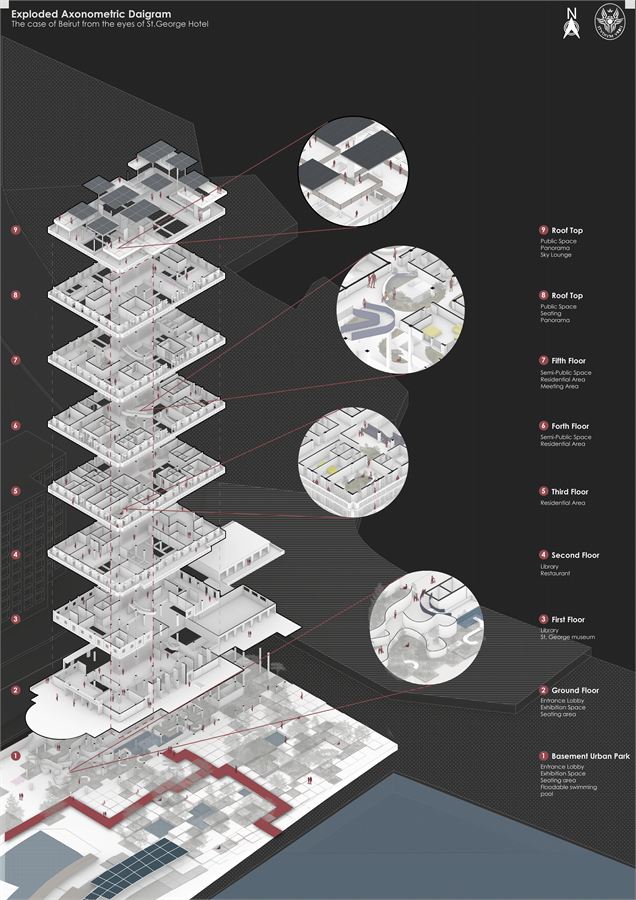
This research explores the significance of architectural preservation and rehabilitation in sustaining collective spatial memory and urban identity. Focusing on buildings from Beirut's colonial era, it investigates how classifications of cultural heritage influence preservation efforts, and how urban regeneration can serve as a catalyst for resilience.
Early modernity, 1920s–1940s
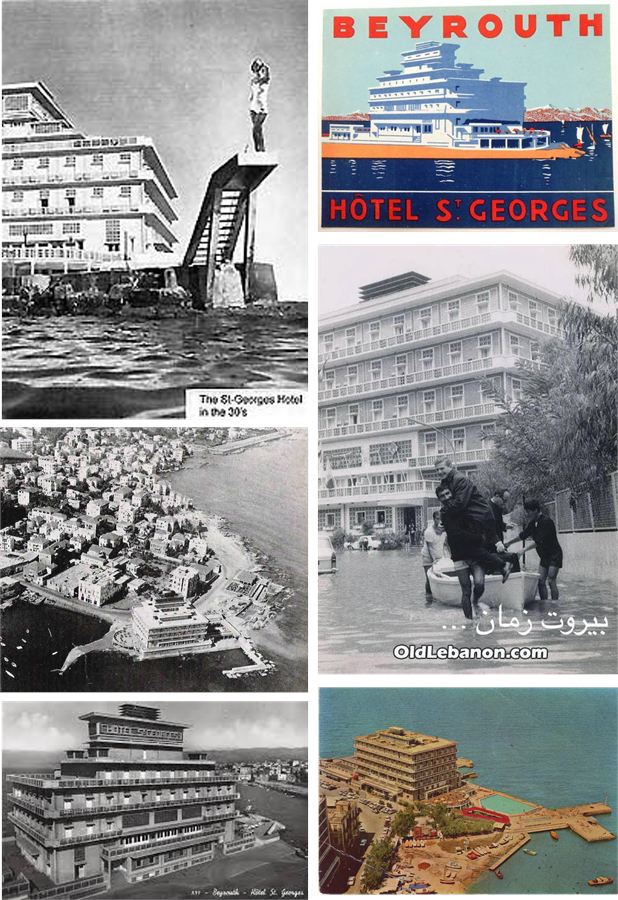
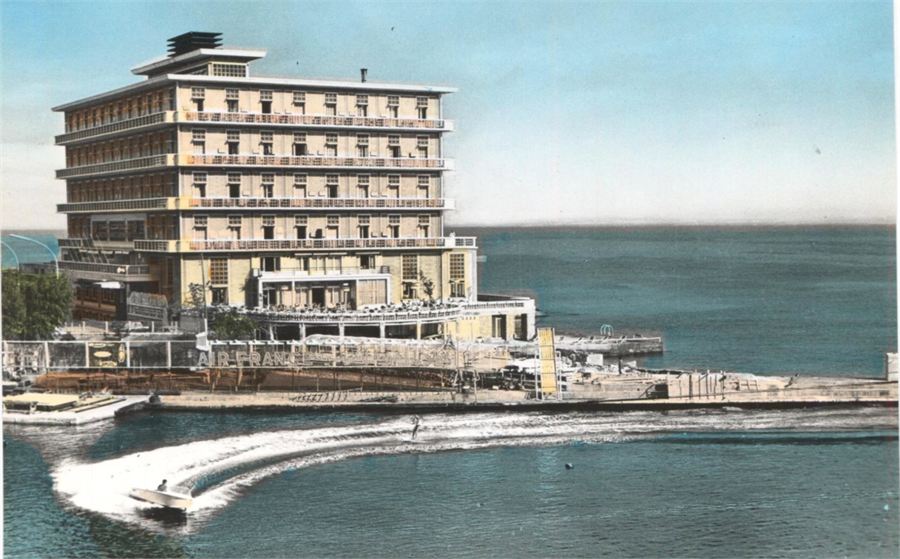
One of the first modern buildings in Beirut, built in 1933 during the French mandate and designed by Auguste Perret with the French-trained Lebanese architect Antoine Tabet. It arrived alongside the Haussmannization of the city, and with a nickname that carried the whole colonial proposition: the Orient of the West. Independence followed in 1943, and with it a post-colonial nationalist wave that moved the city from centralization toward decentralization and sprawl.
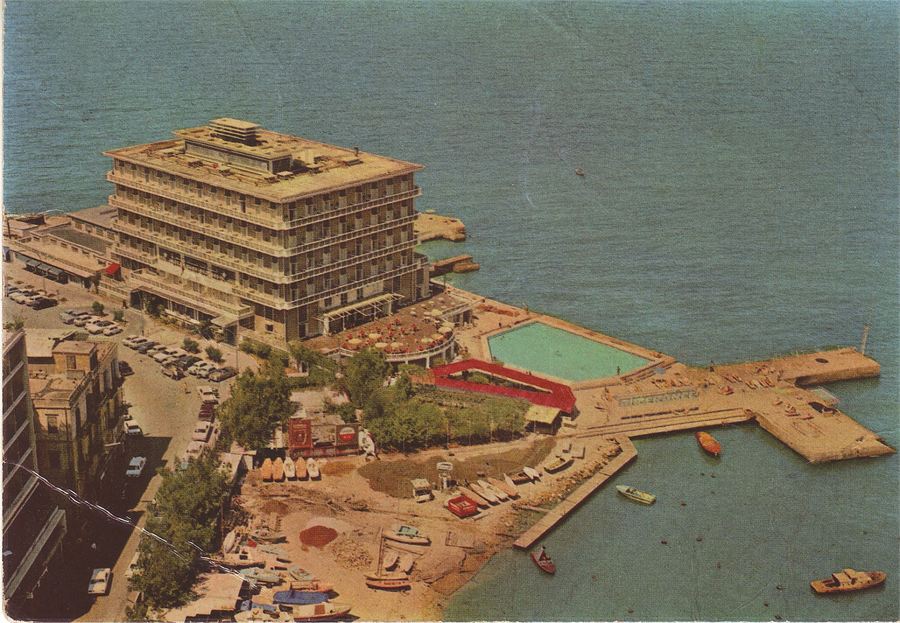
High modernity, 1950s–1970s
The golden age of Beirut. The St. George was named one of the seven best hotels in the world, and the bay became the image the country sold abroad — waterskiing off the terrace, the tourism board's posters, a shoreline organised entirely around leisure.
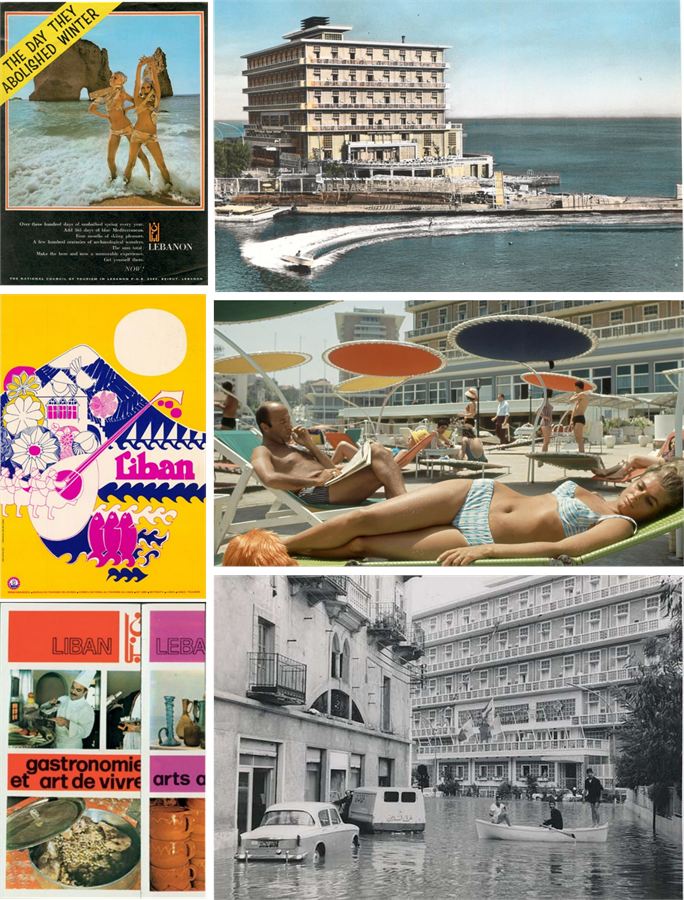
Urban expansion
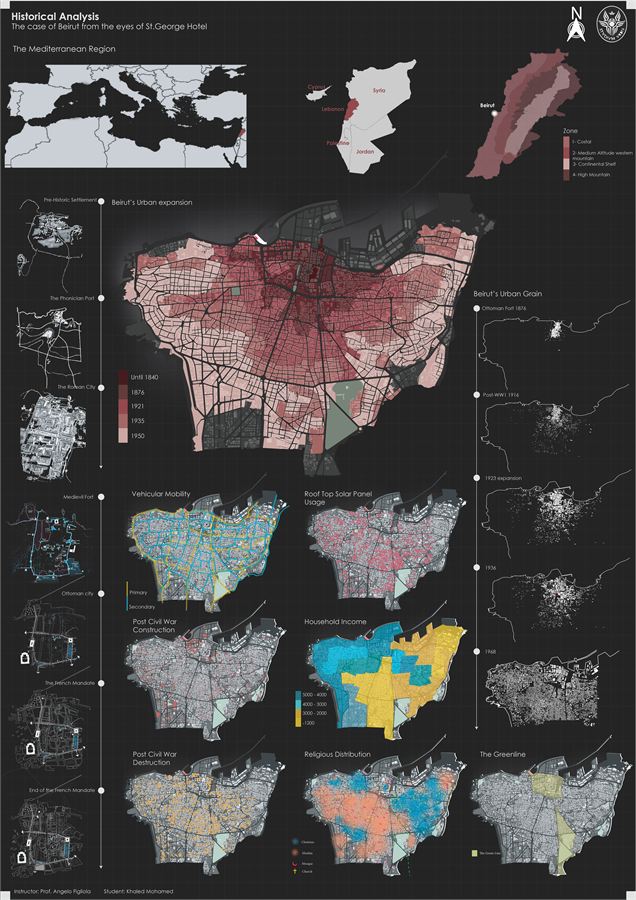
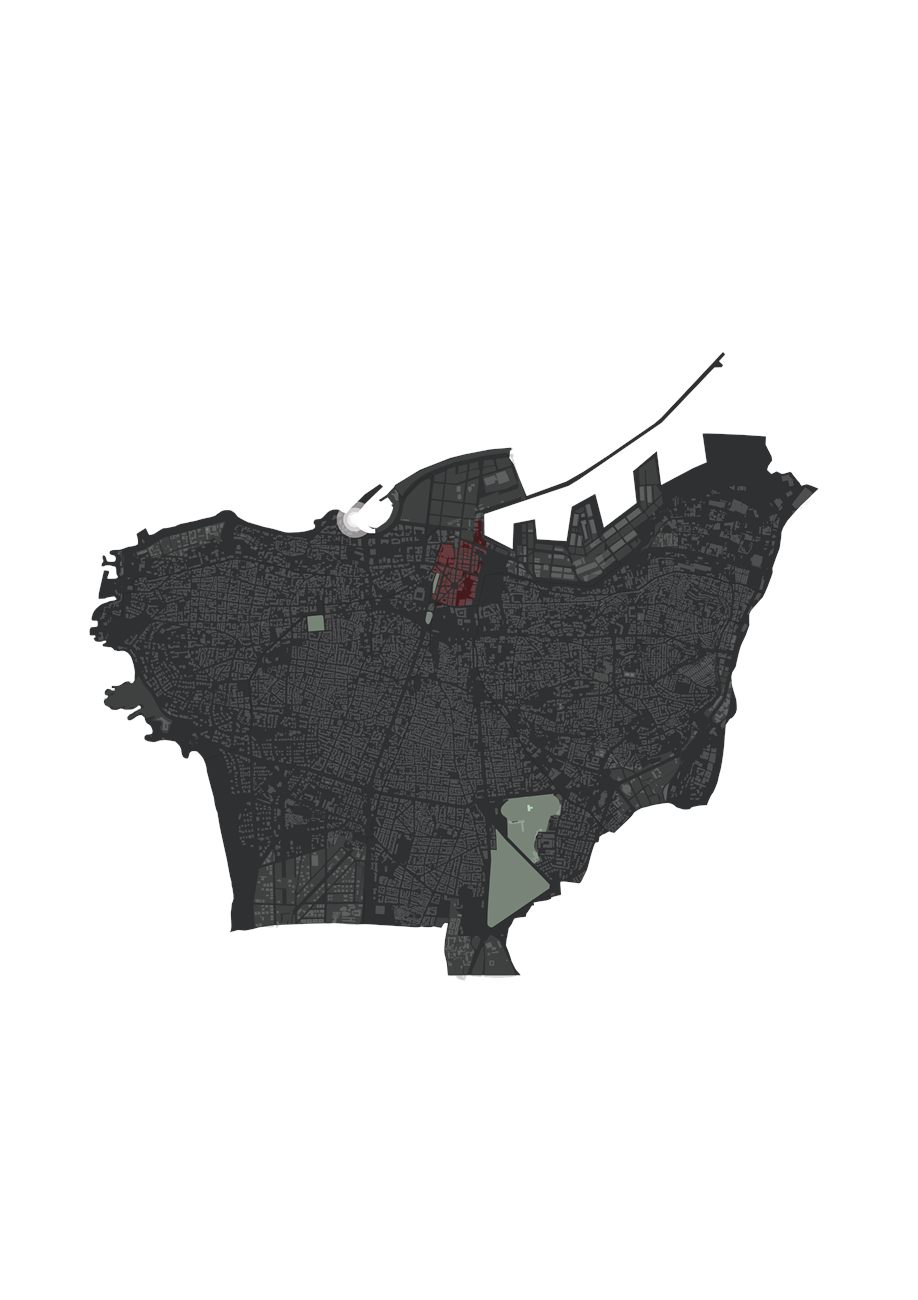
From centralization to decentralization and sprawl. The sequence records how far the city travelled from the shoreline that had defined it.
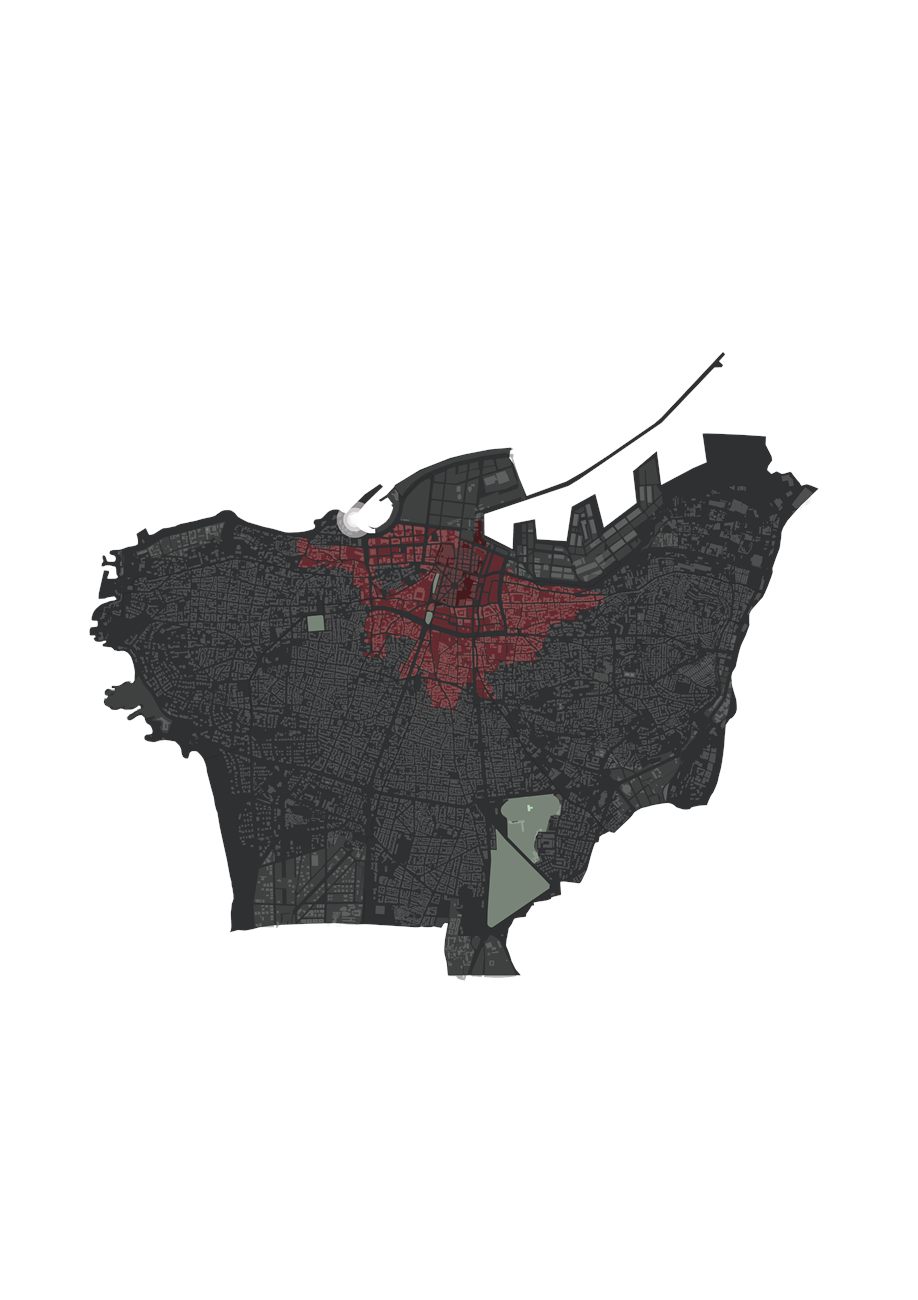
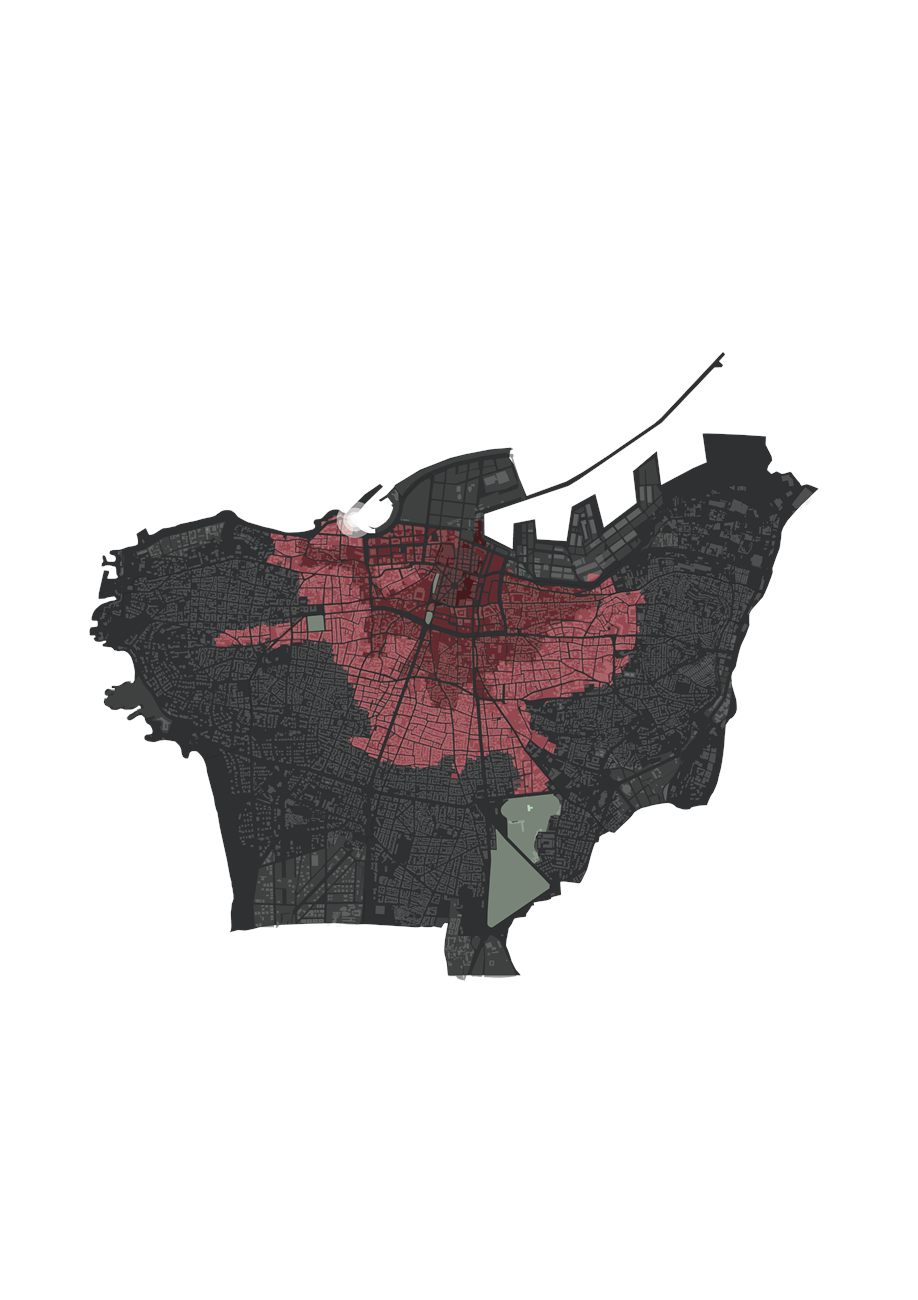
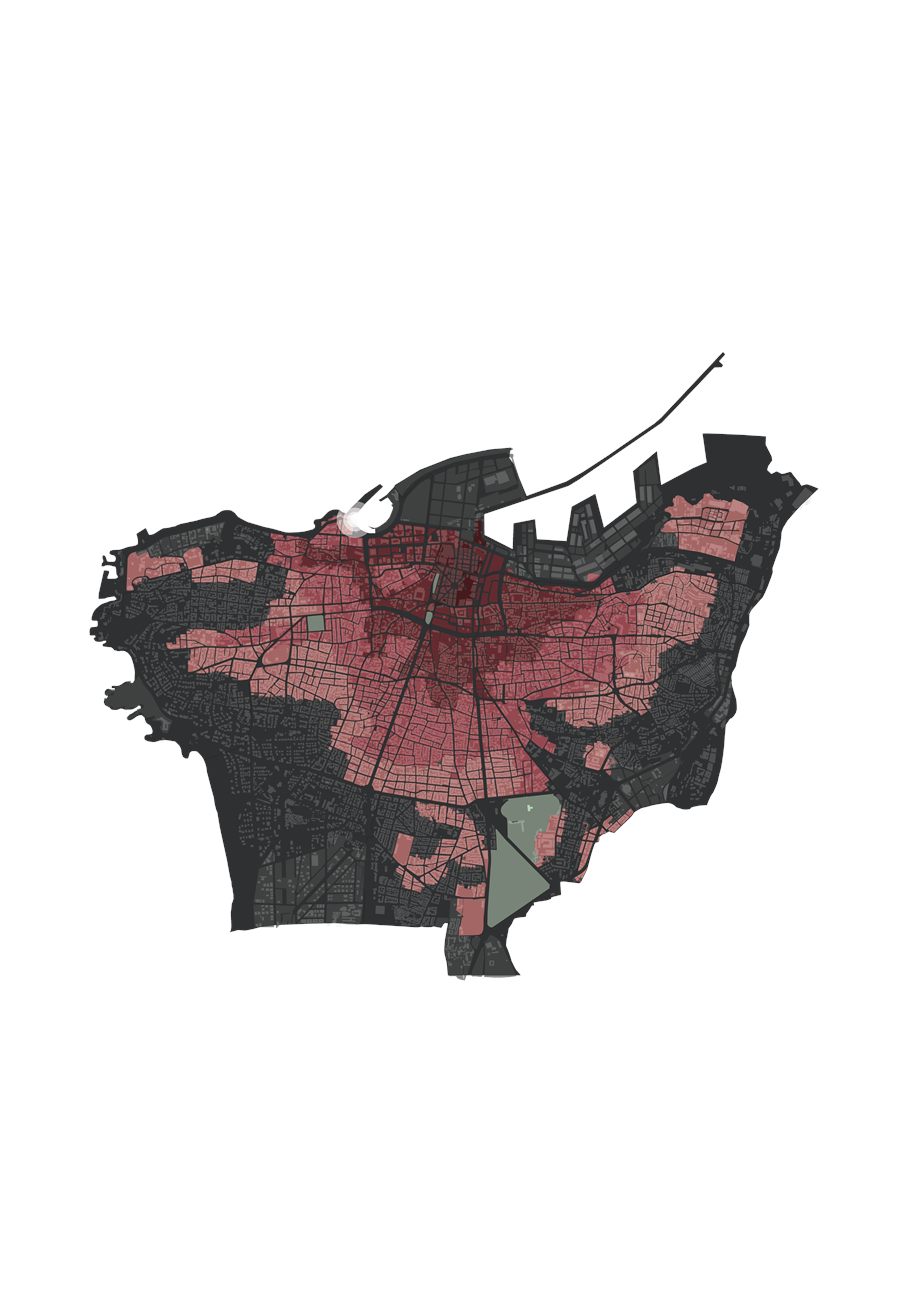
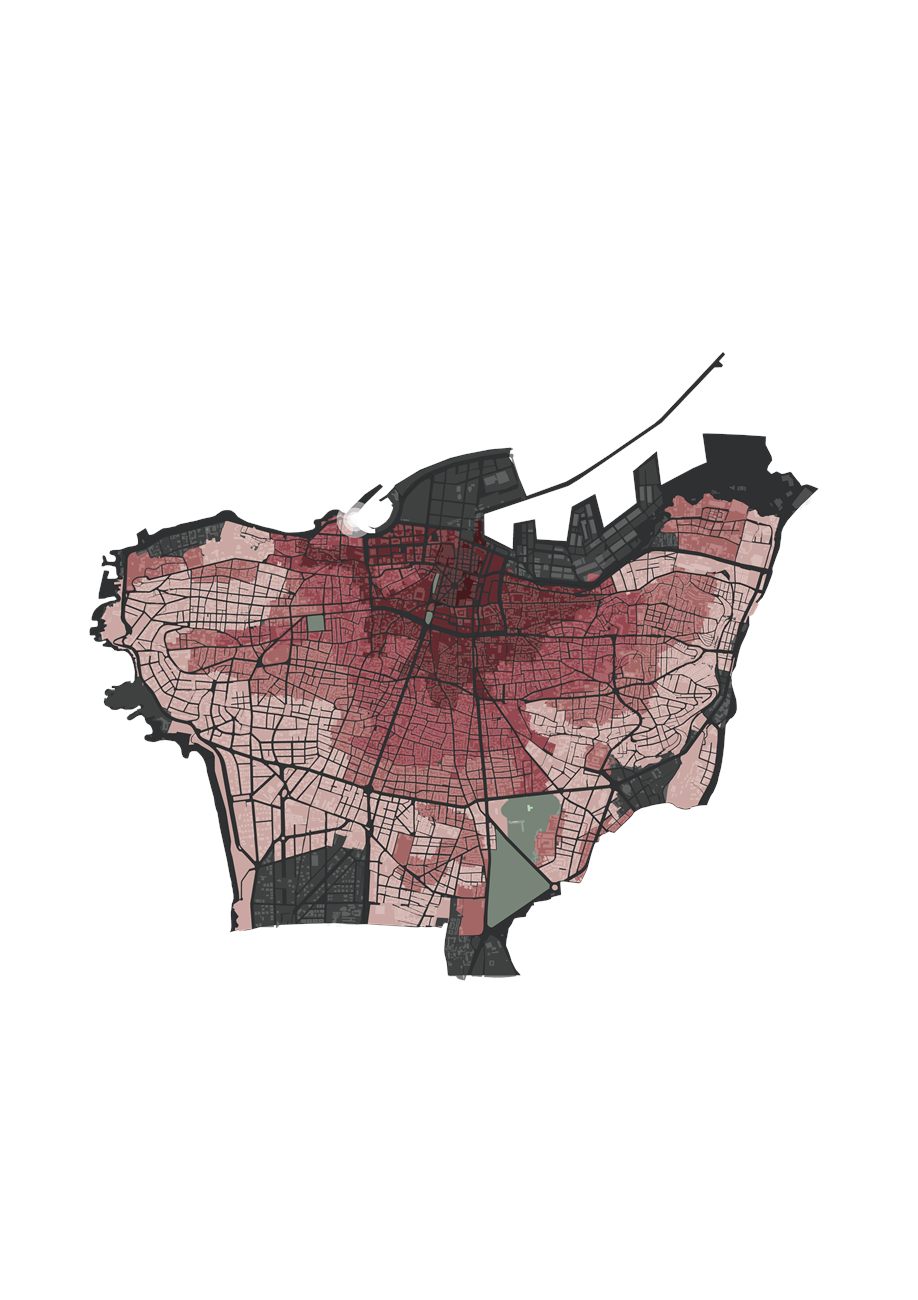
Civil war, 1975–1990
The green line split east from west, and the hotel district became a front. During the Battle of the Hotels the St. George was taken as a prison and a Syrian base — the building that had represented the city's opening to the world became the instrument of its division.
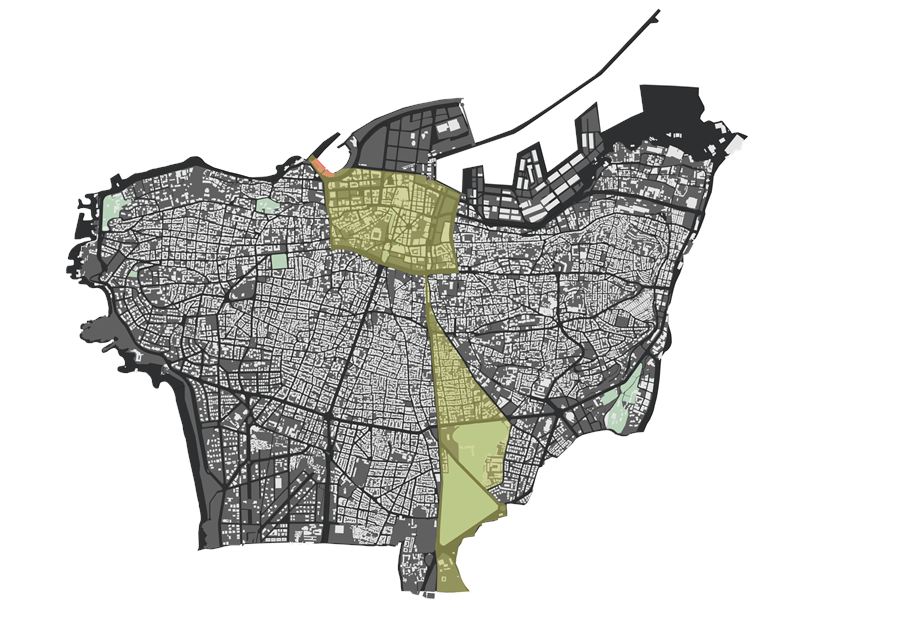
The Harirism era
Unlicensed and out of operation since 1975. SOLIDERE — a private company presenting itself as a healing company — claimed ownership over the land, exercising power over what had been public. Ninety per cent of the old central business district was demolished and star architects were invited in for multimillion-dollar development. The spatial narrative was lost, and gentrification followed. In February 2005 Rafic Hariri was assassinated directly in front of the hotel.
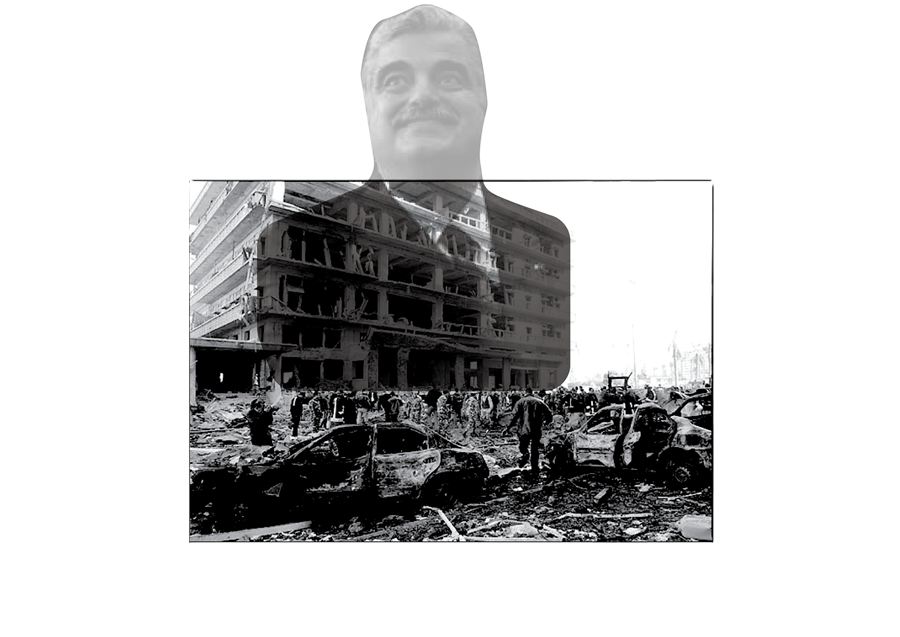
The site today
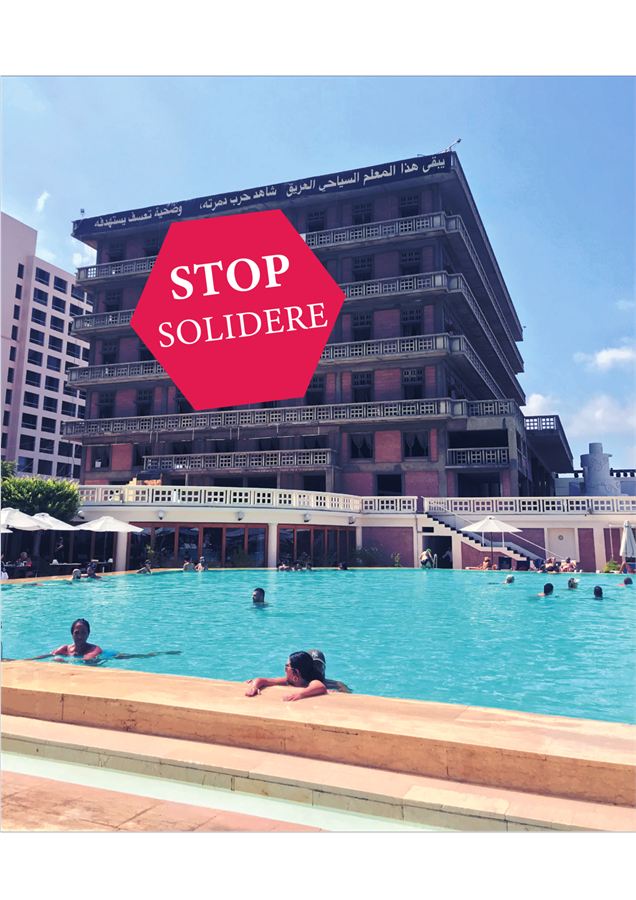
The hotel still stands, shuttered, behind a banner reading Stop Solidere — while the swimming club below it goes on operating. The dispute is the site's present condition, and the thesis takes it as the starting point rather than an obstacle.
Environmental analysis
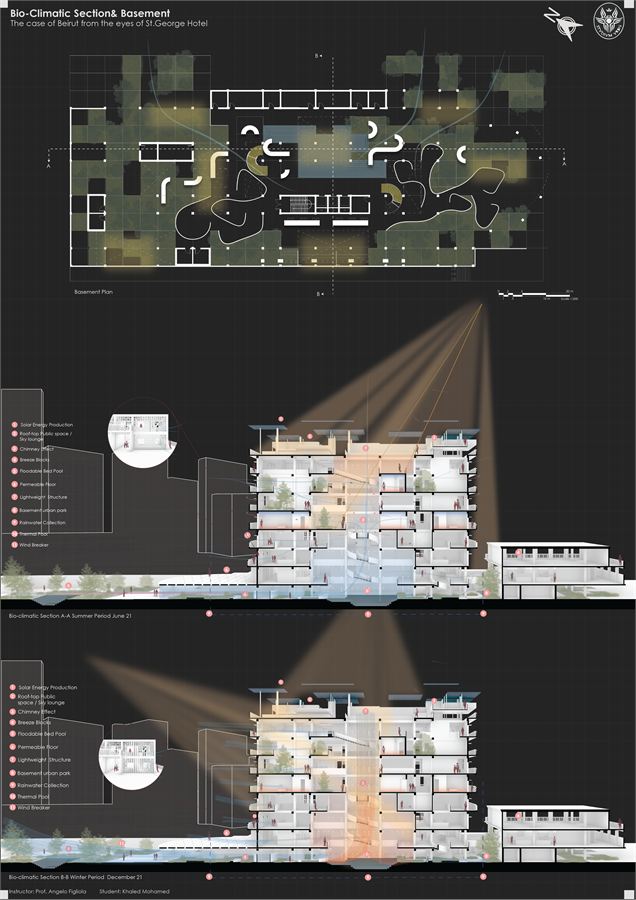
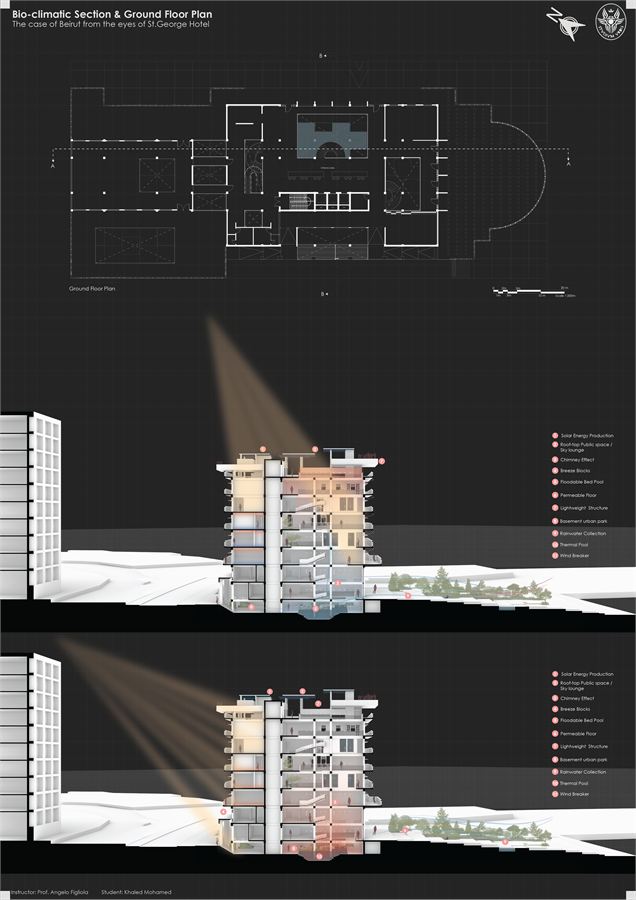
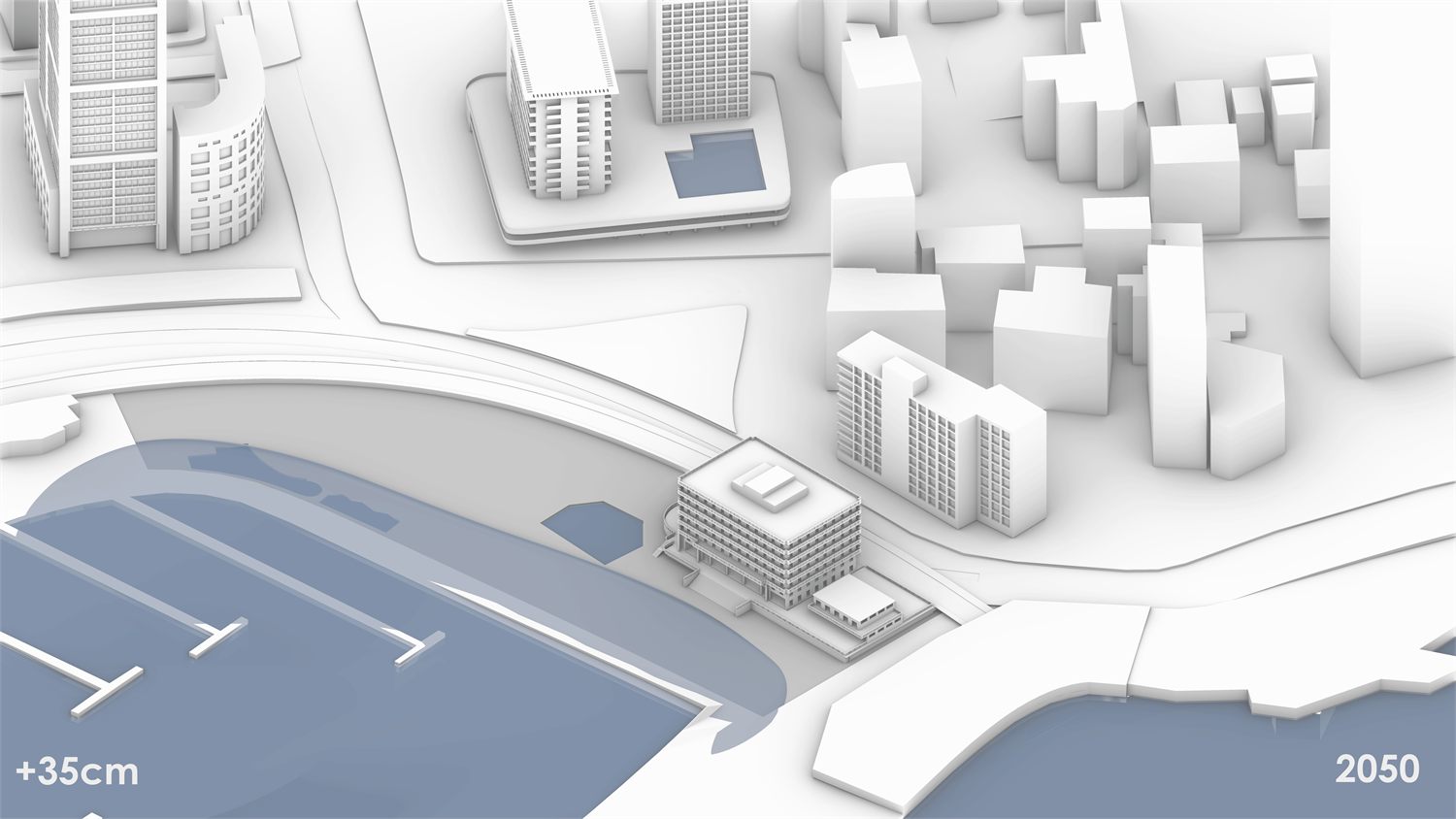
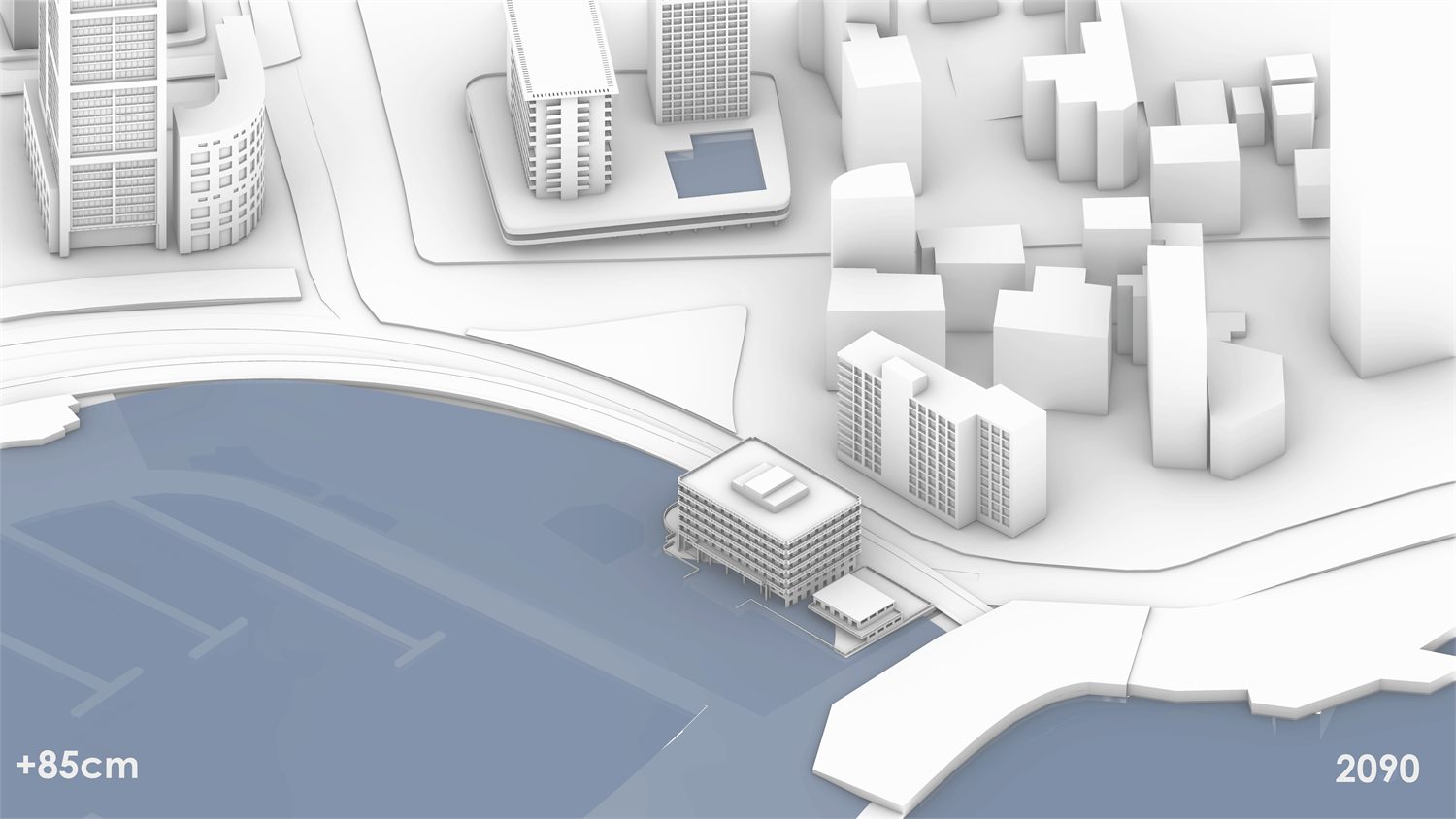
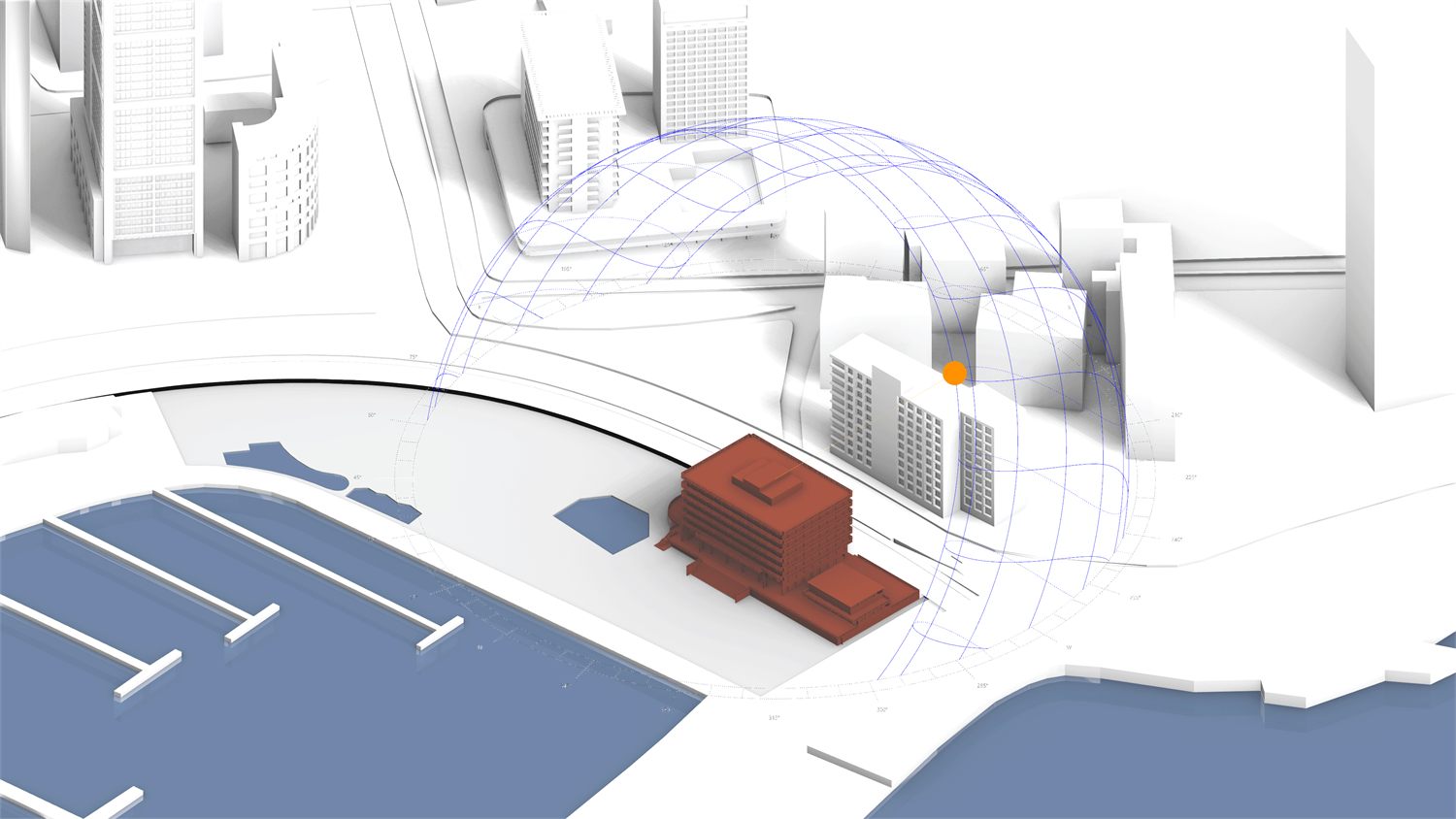
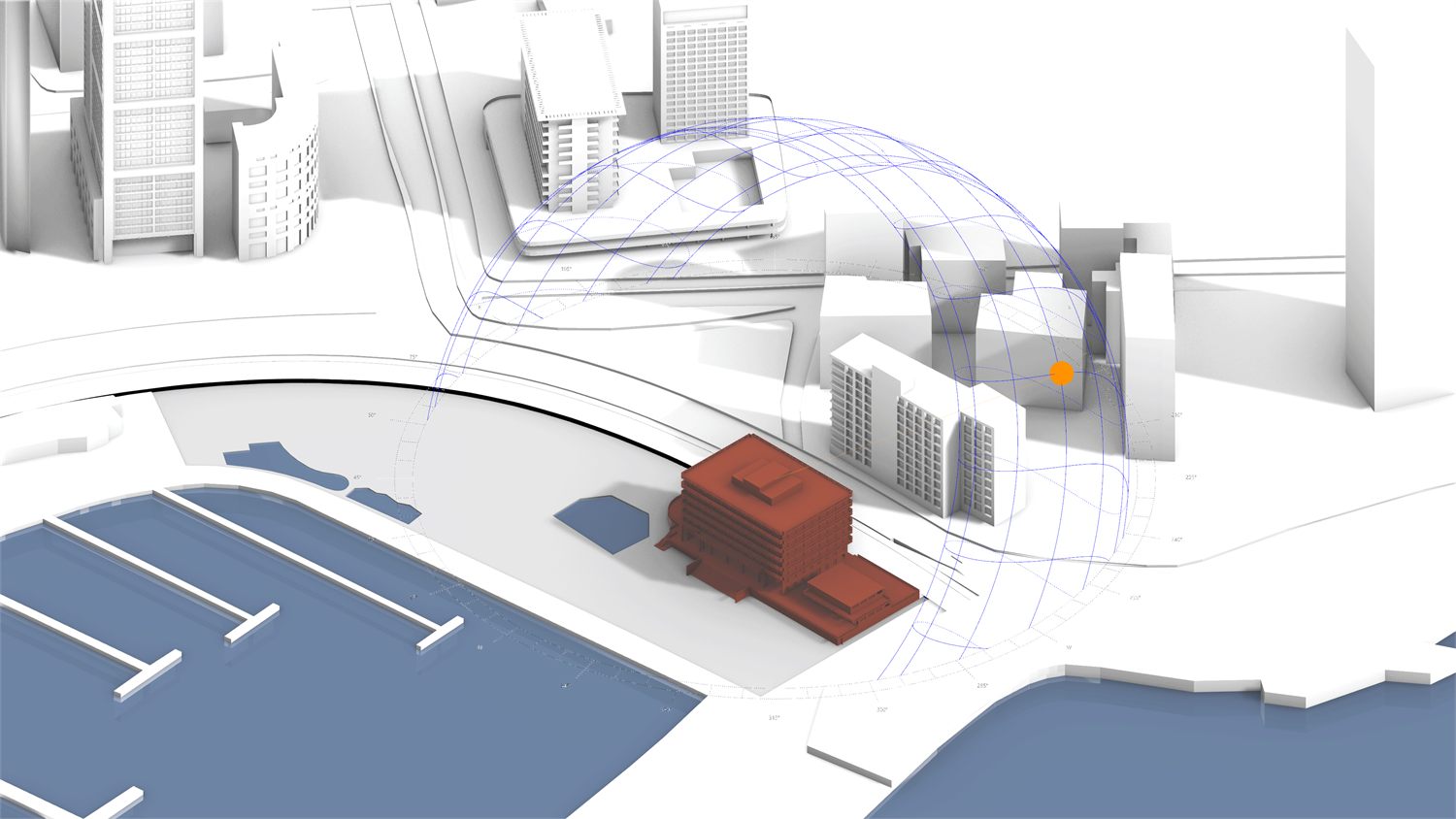
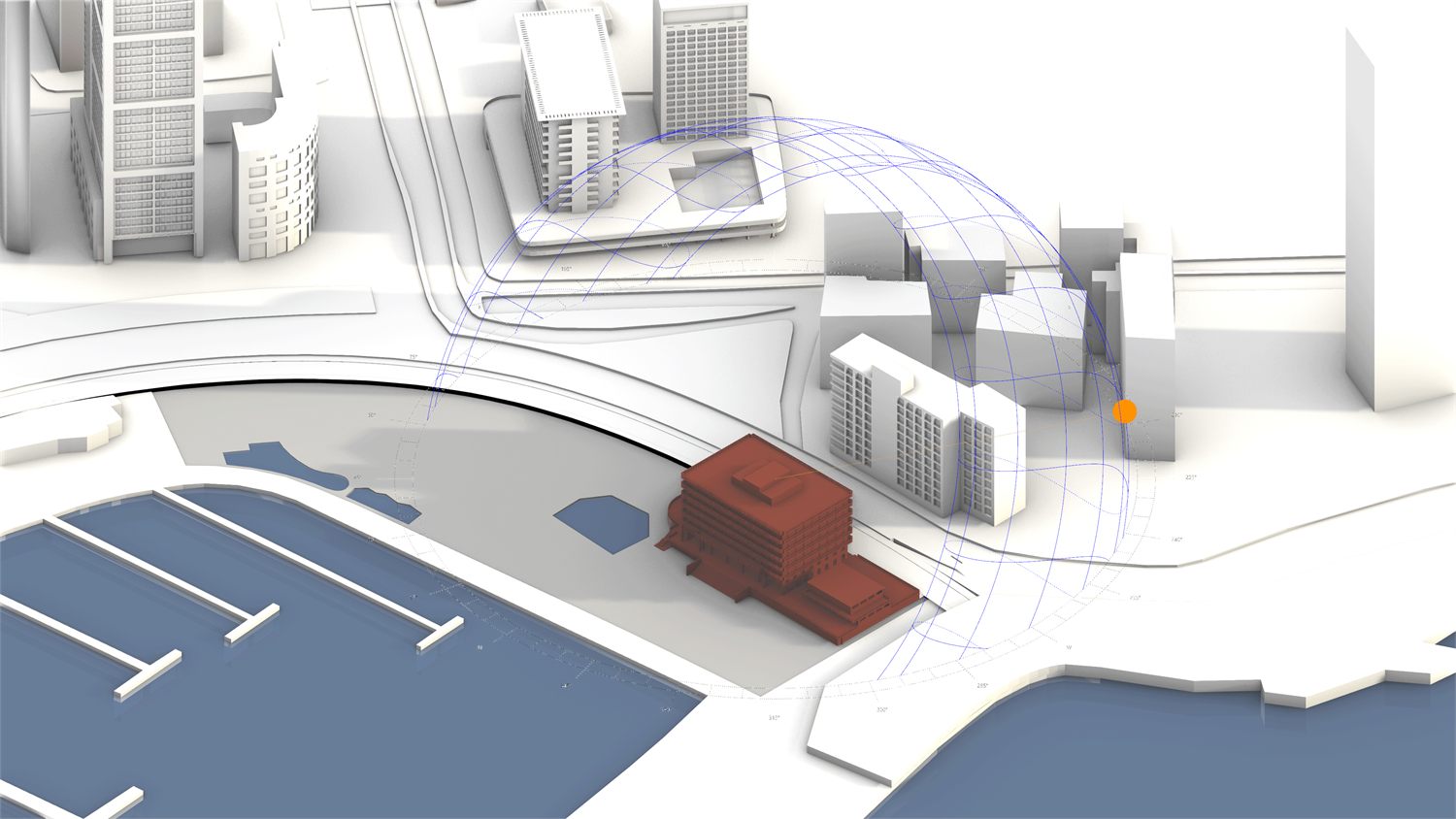
Sea-rise forecast and sun path, run across the site and its context — the climatic argument the regeneration strategy is built on.
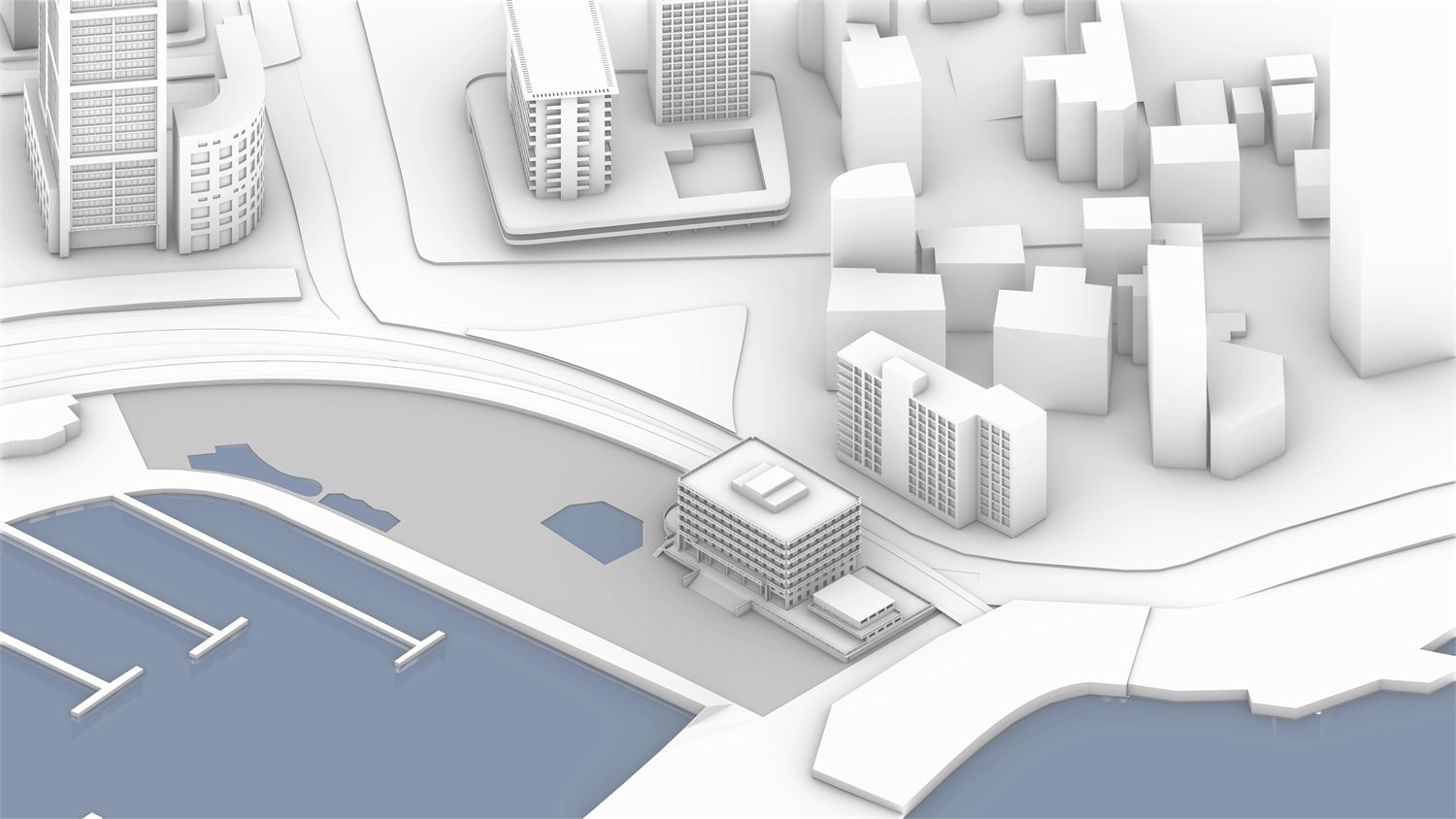








Masterplan
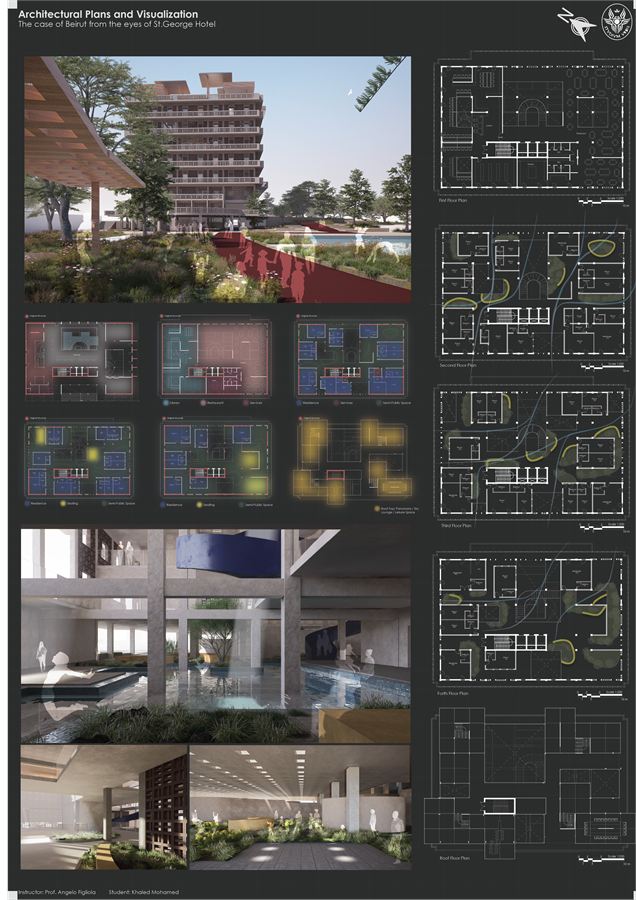
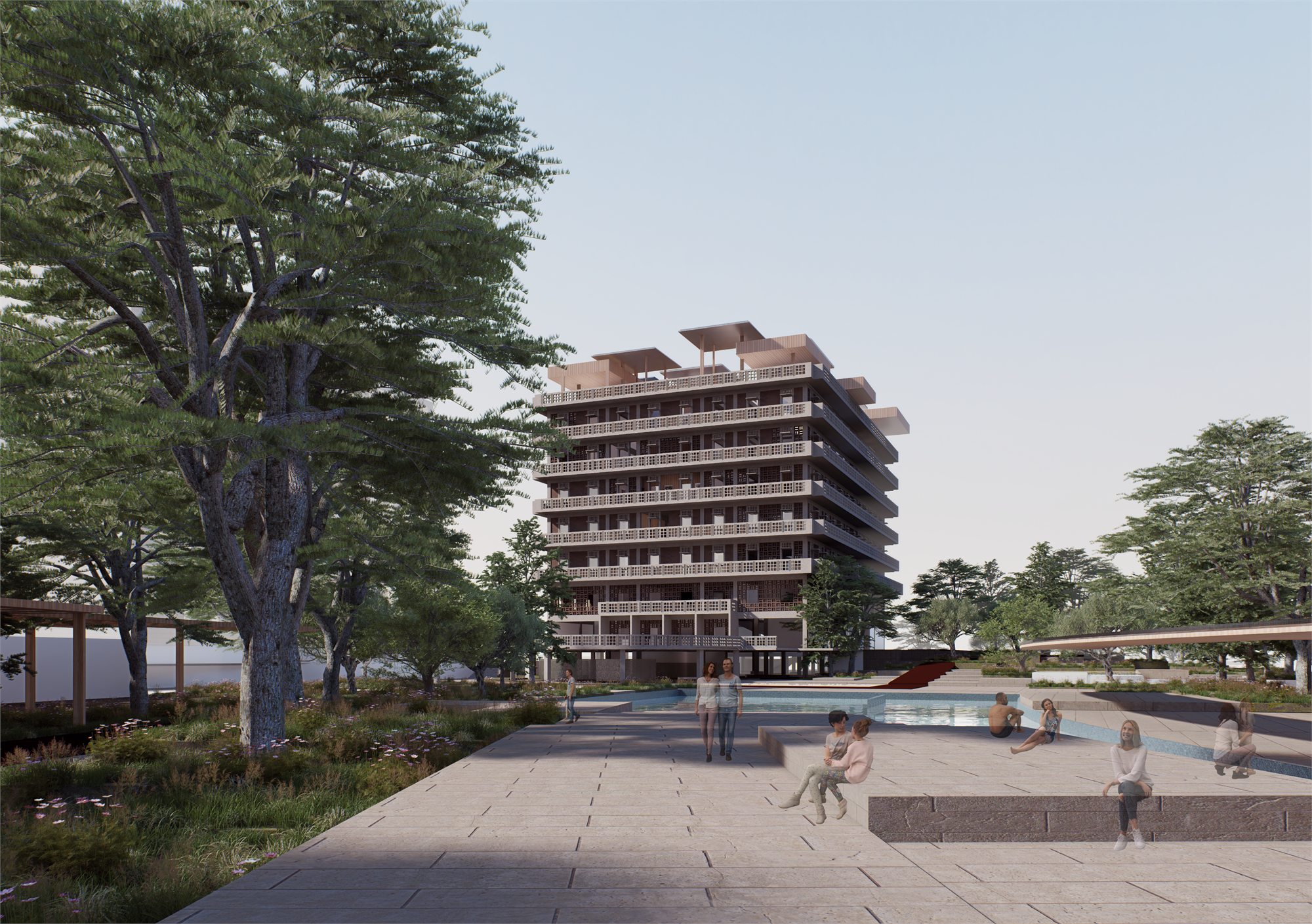
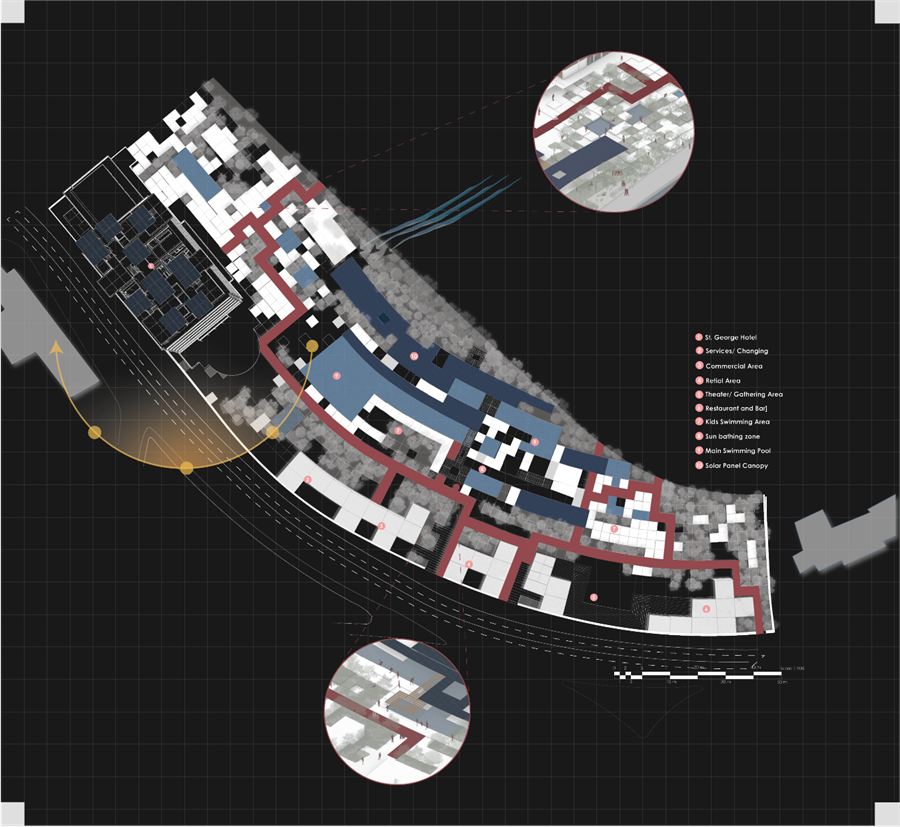
The shoreline read as continuous public ground rather than the forecourt of a private hotel.
Views
Thesis boards
Scroll sideways through the presentation set.